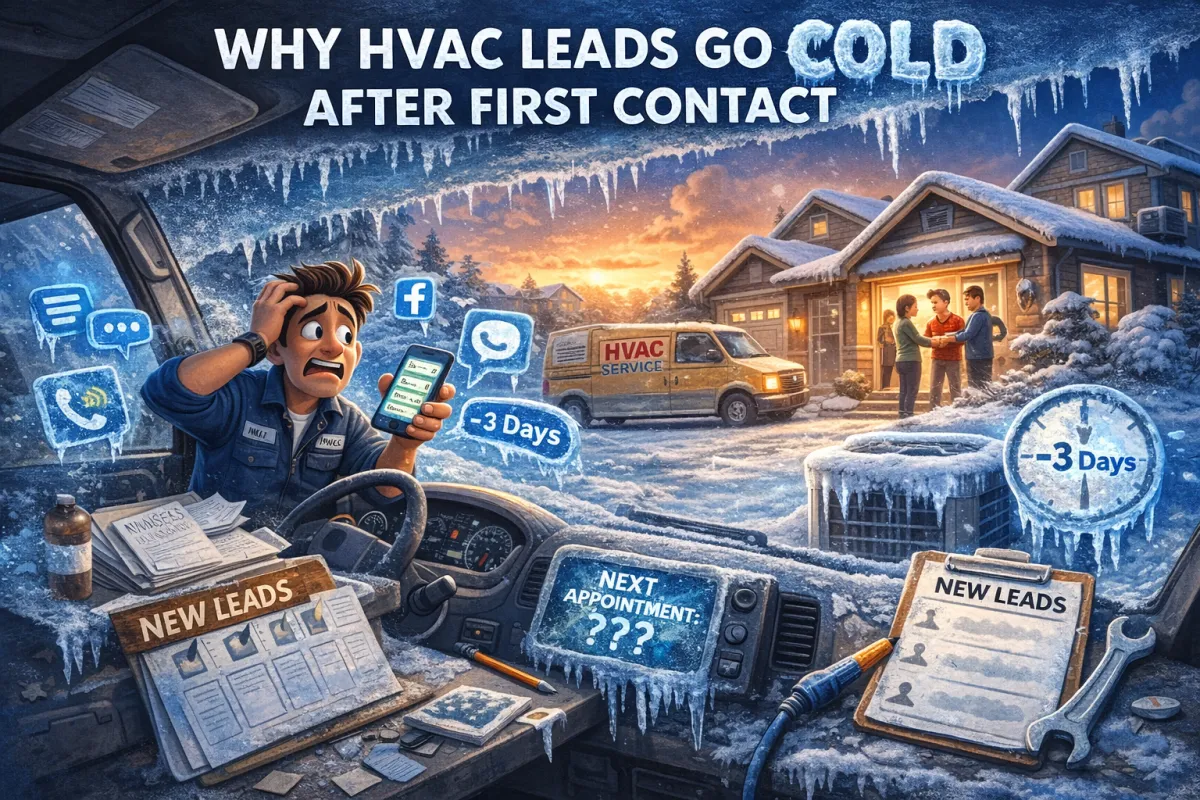
Why HVAC Leads Go Cold After First Contact
You paid for the lead.
You called them.
And then… nothing.
If you run an HVAC company, you already know this frustration.
Leads come in hot, then go silent after the first call or quote.
This is not a lead problem.
It is a follow-up system problem.
Let’s break down why HVAC leads go cold after first contact and how to fix it.
1. Speed Wins HVAC Jobs
HVAC is urgency-driven.
No heat in winter.
No AC in summer.
When a homeowner fills out a form or calls, they are likely contacting 2–4 companies at the same time.
If you respond 30 minutes later, you are already behind.
The first company to respond professionally often wins the appointment.
If your team is on a job and misses the call, that lead starts cooling immediately.
A simple fix is automated response.
Instant text confirmation.
Instant email.
Clear next step.
Speed builds trust.
2. One Call Is Not Follow-Up
Most HVAC companies call once.
If the customer does not answer, they move on.
That is lost revenue.
Homeowners are busy.
They ignore unknown numbers.
They forget to call back.
A proper follow-up sequence includes:
Call.
Text.
Email.
Second call.
Reminder message.
Over several days.
Not in one afternoon.
The companies that win are the ones that stay present without being annoying.
That requires structure.
3. No Clear Next Step After the Quote
Another reason HVAC leads go cold is unclear communication.
You send the estimate.
Then you wait.
The homeowner is comparing prices.
Talking to their spouse.
Checking financing.
If you do not guide them, they drift.
Strong follow-up sounds like this:
“Here’s your quote.
We have availability Thursday at 10am or Friday at 2pm.
Which works better?”
Specific beats vague.
Appointments beat open-ended conversations.
4. No Nurture for “Not Right Now” Leads
Not every HVAC lead is ready today.
Some are price shopping.
Some are planning a future replacement.
If you do not have a system to stay in front of them, they forget you.
Email updates.
Seasonal reminders.
Maintenance tips.
Financing offers.
This is where warm email marketing becomes powerful.
You stay top of mind until they are ready.
One of our clients generated roughly $2.1M in contracted revenue using consistent warm email communication.
Most HVAC companies never follow up after 30 days.
That is money left on the table.
5. No Automation Means Inconsistent Results
If your follow-up depends on your office manager remembering to send messages, it will never be consistent.
Busy days kill follow-up.
Emergencies override marketing.
That is why HVAC marketing must become a system.
Automated lead capture.
Automated text replies.
Automated reminders.
Automated email nurture.
When this runs daily, leads stop going cold.
They get warmed back up automatically.
6. You Are Paying for Leads You Never Close
Whether you are running Google Ads, Local Service Ads, or Facebook Ads, every missed follow-up is wasted ad spend.
Most HVAC companies focus on “getting more leads.”
The real opportunity is closing more of the leads you already paid for.
If you improve your close rate by even 10–20%, your revenue increases without increasing ad spend.
That is leverage.
The Fix: Build a Lead Conversion System
If HVAC leads are going cold after first contact, the answer is not more ads.
It is better follow-up.
A true HVAC marketing system includes:
Fast response automation.
Multi-step follow-up.
Clear booking prompts.
Warm email nurture.
Data tracking.
At Manic Marketing, we help HVAC businesses build AI-powered systems that generate more leads, book more appointments, and close more jobs consistently.
Our EZ Marketing Engine automates outreach and conversations.
Our Warm Email Marketing keeps you top of mind.
Our websites are built to convert, not just look good.
If you are tired of watching HVAC leads go cold, book a complimentary strategy call with our team.
Go here:
https://manicmarketing.com/strategy-session
When you book, you will also receive a 100% free AI Content Marketing tool that connects to your business’s social profiles and auto-posts across up to 8 platforms.
More leads help.
But better systems close them.
