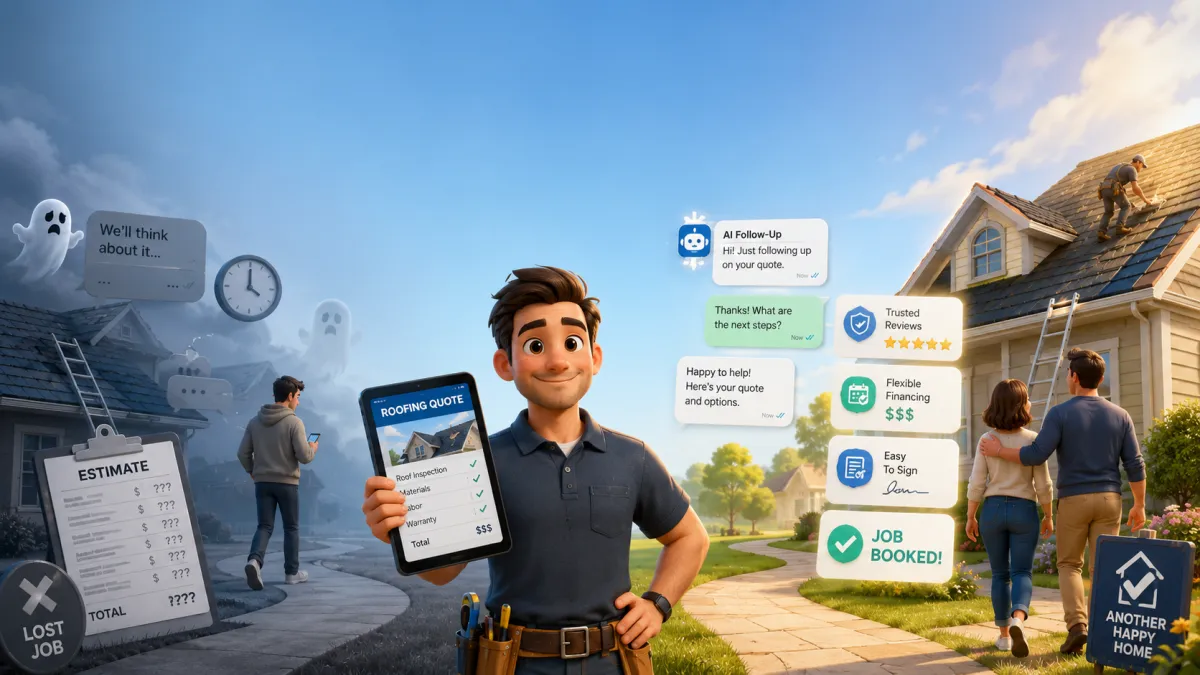
Why Homeowners Ghost After Asking For Quotes
Most roofers think ghosting means the homeowner was never serious.
Sometimes that is true.
Most of the time, it is not.
Homeowners usually do not disappear because they hate getting their roof fixed.
They disappear because the process felt unclear, slow, overwhelming, or easy to put off.
That is the real problem.
And if you want more signed jobs, you need to fix what happens after the quote request.
Homeowners Do Not Buy Roofing Jobs Lightly
A roof is not an impulse purchase.
Nobody wakes up excited to spend thousands on shingles, flashing, or underlayment.
Homeowners ask for quotes because they have a problem.
A leak.
Storm damage.
An aging roof.
An insurance issue.
A repair that may turn into a replacement.
But asking for a quote is not the same as being ready to commit.
They are still nervous.
Still comparing.
Still trying to make sense of the price.
Still wondering who they can trust.
That means the sales process matters just as much as the estimate.
The First Reason They Ghost Is Slow Follow-Up
Speed matters.
A homeowner fills out a form, calls your office, or requests an inspection because the issue is top of mind right then.
If your business waits too long to reply, momentum dies.
They move on.
They call the next roofer.
They forget who you were.
They stop feeling urgency.
Fast follow-up gives you an edge.
Not because it is flashy.
Because it shows you are organized and serious.
If you want fewer ghosted quotes, the first step is simple.
Respond faster.
The Second Reason Is The Quote Was Confusing
A lot of roofers hand over quotes that make sense to roofers.
Not to homeowners.
That is a problem.
If the homeowner cannot clearly understand what is included, what is different, why the price is what it is, and what happens next, confusion creeps in.
Confused people delay.
And delayed decisions often turn into ghosting.
A strong quote should explain:
What problem you found.
What work is being done.
What materials are included.
What the homeowner can expect.
Why the price makes sense.
What the next step is.
Clear beats technical.
Every time.
The Third Reason Is They Do Not Fully Trust You Yet
Roofing is a trust-heavy sale.
Homeowners are not just buying materials and labor.
They are buying peace of mind.
They are asking:
Will this company actually show up?
Will they do the work right?
Will they stand behind it?
Will I get hit with surprises later?
If your quote process does not build trust, the homeowner keeps looking.
That is why proof matters.
Reviews.
Photos.
Job examples.
Before-and-after work.
Clear communication.
A professional website.
Consistent follow-up.
Trust is rarely built in one touch.
It is built through the full experience.
The Fourth Reason Is They Are Comparing Multiple Roofers
This one is normal.
Most homeowners do not request one quote.
They request several.
That means you are not only selling against price.
You are selling against every other experience they are having.
If your competitor responds faster, explains the job better, and follows up more clearly, they win.
Even if your price is solid.
This is why ghosting is not always about being “too expensive.”
Sometimes it is about being forgettable.
The Fifth Reason Is They Got Sticker Shock
Roofing quotes can be a punch to the wallet.
Even when the homeowner expected it.
If the number feels high and there is no context around the value, they freeze.
Not necessarily because they cannot afford it.
Because they do not feel ready to process it.
A good roofer does not just give a number.
They help the homeowner understand the number.
Why the repair matters.
Why delay could cost more.
What quality materials protect them from.
What shortcuts often lead to.
Price without context creates hesitation.
Context creates confidence.
The Sixth Reason Is They Need More Time Than You Think
Some homeowners are not saying no.
They are just not ready yet.
They need to talk to a spouse.
Review insurance details.
Look at financing.
Think through priorities.
Get more information.
That does not mean they should disappear forever.
But if you do not stay in touch, they often do.
This is where good follow-up makes the difference.
Not pushy follow-up.
Useful follow-up.
A short check-in.
A reminder.
A helpful answer.
A financing option.
A next-step explanation.
That is what keeps the conversation alive.
The Seventh Reason Is Your Follow-Up Is Weak
A lot of roofers follow up like this:
“Just checking in.”
That message usually goes nowhere.
It gives the homeowner no reason to reply.
A better follow-up reminds them why they reached out and what matters next.
For example:
“Hey John, wanted to follow up on the roof quote we sent over for the storm damage on your home.
Do you have any questions about the scope, timeline, or next step?”
That works better because it is specific.
It feels like a real conversation.
Not a lazy nudge.
Ghosting Often Means The Sales Process Has Holes
Roofers tend to blame ghosting on leads.
But a lot of ghosting is really process failure.
Slow response.
Weak trust.
Unclear estimates.
No follow-up system.
No financing explanation.
No helpful reminders.
No clear next step.
If your process has holes, leads fall through them.
That is not bad luck.
That is a fixable system problem.
How Roofers Can Reduce Ghosting
Here is the practical part.
If you want fewer ghosted quotes, tighten the process.
1. Respond Fast
Call, text, or email quickly after the lead comes in.
Do not let the opportunity cool off.
2. Make The Quote Easy To Understand
Explain the scope, materials, price, and next step in plain language.
3. Build Trust Early
Use reviews, photos, warranties, and job examples.
Show that you are credible.
4. Follow Up With Purpose
Do not send vague messages.
Answer questions.
Address concerns.
Guide the decision.
5. Offer Financing Or Payment Clarity
If payment options exist, explain them.
That can reduce sticker shock.
6. Use A CRM And Automation
Track every lead.
Set reminders.
Send follow-ups.
Do not rely on memory.
7. Stay In Touch Without Being Annoying
A lead does not need ten pushy messages.
They need a few smart ones at the right time.
AI Can Help Roofers Follow Up Better
This is where a lot of roofing companies can win quickly.
AI follow-up can help you respond fast, send reminders, answer common questions, and keep quote leads from going cold.
It can also help you re-engage homeowners who never replied the first time.
That matters because many ghosted quotes are not dead.
They are just unattended.
A smart system can text after the inspection.
Email the estimate.
Send a reminder.
Offer a booking link.
Trigger a financing message.
Move the lead through the pipeline.
That gives your team more consistency without more chaos.
How Manic Marketing Helps
Manic Marketing helps business owners use AI marketing tools to generate more leads, book more appointments, and close more sales.
For roofers, that means more than just getting quote requests.
It means building a system that helps those quote requests turn into real jobs.
That can include AI follow-up, CRM workflows, lead nurturing, website strategy, and marketing systems designed to stop good leads from slipping away.
The goal is simple.
More trust.
Better follow-up.
More signed roofing jobs.
Final Takeaway
Homeowners ghost after asking for quotes because the process breaks down.
The response is too slow.
The estimate is too confusing.
The trust is too weak.
The follow-up is too generic.
The next step is not clear enough.
That is the real issue.
If you fix the process, you close more jobs.
Simple as that.
Ghosting is not always rejection.
A lot of the time, it is just lost momentum.
And momentum can be rebuilt with the right system.
Want Help Turning More Roofing Quotes Into Signed Jobs?
Book a complimentary strategy call with the Manic Marketing team here:
https://manicmarketing.com/strategy-session
When you book, you will also get access to a 100 percent free AI Content Marketing tool.
It connects to your business’s social media profiles.
It uses AI to create content.
It can auto-post across up to 8 different platforms.
If your roofing company is getting quote requests but not enough closed jobs, now is the time to fix the follow-up system.
